CORAA
AI Modules/Procedures/ಮಾದರಿ
SA 530 · ಕಾರ್ಯವಿಧಾನ· विधि

ಮಾದರಿ

The formula shown. Selections seeded. Peer reviewers obtain identical ವೌಚರ್‌ಗಳು.

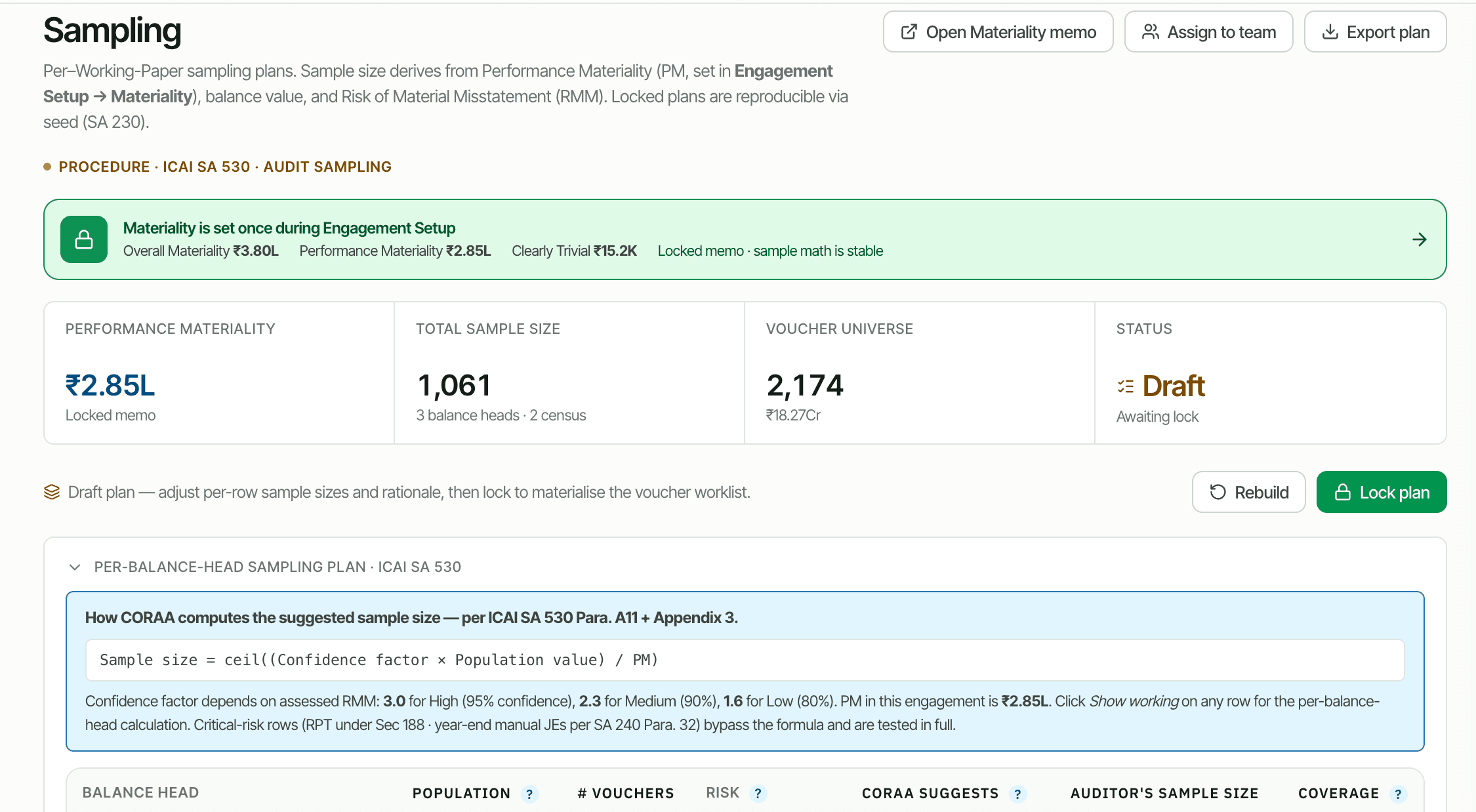
CORAA ಮಾದರಿ, per-WP plans with SA 530 formula rendered

When a peer reviewer asks why the ಮಾದರಿ ಗಾತ್ರ is 62, 'the engine picked them' is not an answer. CORAA renders the SA 530 formula explicitly, ಮಾದರಿ ಗಾತ್ರವು ಇದರ ಸೀಲಿಂಗ್‌ಗೆ ಸಮಾನ (confidence factor × population value) divided by performance ಪ್ರಾಮುಖ್ಯತೆ. Confidence factors derive from the Poisson distribution. Selections are seeded, peer reviewers running ಅದೇ ಸೀಡ್ obtain identical ವೌಚರ್‌ಗಳು.

  • Per-Working-Paper plans, not one ಎಂಗೇಜ್‌ಮೆಂಟ್-wide sample
  • Formula rendered on every plan: ceil((CF × Population value) / PM)
  • Confidence factors: 3.0 at 95% (high ಅಪಾಯ), 2.3 at 90% (medium), 1.6 at 80% (low)
  • Force-ಗಾಗಿ ಜನಗಣತಿ ಸಾಲುಗಳು 100% testing, year-end manual JEs, related parties, employee benefits
  • Seeded selection per SA 230 Para. 8, peer reviewers obtain identical ವೌಚರ್‌ಗಳು
  • Lock requires the rationale captured at sign-off
Two paths, one ledger

The old way, and ours.

Two paths to the same audit conclusion. One leaves traces; the other doesn't.

Traditional

The old way

  • -Sample sizes set on judgment, 'around 30 ವೌಚರ್‌ಗಳು per balance head'
  • -Confidence factor and ಅಪಾಯ assessment rarely documented
  • -Selection done by picking 'every nth' ವೌಚರ್ ಅಥವಾ visually significant ones
  • -Peer reviewer cannot retrace the selection logic
  • -Adjustments mid-ಎಂಗೇಜ್‌ಮೆಂಟ್ (more ವೌಚರ್‌ಗಳು added) not documented
Defensible only on the ಆಡಿಟರ್'s word. SA 230 reproducibility test rarely satisfied.
CORAA

On the Ledger

  • Sample size derived from a formula visible on the ವರ್ಕಿಂಗ್ ಪೇಪರ್
  • Confidence factor explicit, 3.0/2.3/1.6 mapped to ಅಪಾಯ level
  • MUS for high-value populations; simple random for low-value, homogeneous
  • Force-census rows configurable: year-end manual JEs, RPT, employee benefits
  • Selection seeded, ಎಂಗೇಜ್‌ಮೆಂಟ್ ID + ಬ್ಯಾಲೆನ್ಸ್ ಹೆಡ್ ಕೋಡ್ derives the seed
  • Peer reviewer with ಅದೇ ಸೀಡ್ obtains identical ವೌಚರ್‌ಗಳು
Every sample defensible. SA 230 reproducibility satisfied. NFRA-inspection ready.
How it works

Three steps. Every trace logged.

Step 01

Set the ಅಪಾಯ level per balance head

For each ವರ್ಕಿಂಗ್ ಪೇಪರ್, the ಆಡಿಟರ್ sets the ಅಪಾಯ of Material Misstatement, High (95% confidence), Medium (90%), or Low (80%). The confidence factor follows: 3.0 / 2.3 / 1.6 from the Poisson distribution at -ln(α).

Step 02

Sample size renders

Sample size = ceil((confidence factor × population value) / Performance ಪ್ರಾಮುಖ್ಯತೆ). Worked example: Trade Payables population ₹5 crore, PM ₹35.8 lakh, high ಅಪಾಯ = ceil((3.0 × 5,00,00,000) / 35,80,000) = 42 ವೌಚರ್‌ಗಳು. The formula is rendered on the ವರ್ಕಿಂಗ್ ಪೇಪರ್.

Step 03

Lock the plan

Locking generates the deterministic ವೌಚರ್ selection per SA 230 Para. 8. The seed is derived from ಎಂಗೇಜ್‌ಮೆಂಟ್ ID + ಬ್ಯಾಲೆನ್ಸ್ ಹೆಡ್ ಕೋಡ್. ಅದೇ ಸೀಡ್ ನಡೆಸುವ ಪೀರ್ ರಿವ್ಯೂವರ್ ಅದನ್ನು ಪಡೆಯುತ್ತಾರೆ same ವೌಚರ್‌ಗಳು. Locked plans are read-only; unlock requires a documented note.

Inside the module

What you actually get.

Formula visible, no black box

Every ವರ್ಕಿಂಗ್ ಪೇಪರ್ renders the sample-size formula explicitly: ceil((Confidence factor × Population value) / Performance ಪ್ರಾಮುಖ್ಯತೆ). The confidence factor, the population value, and the PM all show on the page. The ಆಡಿಟರ್ can defend the ಮಾದರಿ ಗಾತ್ರ on the spot.

  • Formula shown on every plan
  • Confidence factor explicit with derivation
  • ಆಡಿಟರ್'s adjustment (with reason) supported
  • ವ್ಯಾಪ್ತಿ percentage shown alongside count

Confidence factors from the Poisson distribution

ICAI SA 530 Para A11 + Appendix 3 derives confidence factors from -ln(α) where α is the acceptable ಮಾದರಿ ಅಪಾಯ. High ಅಪಾಯ → 95% confidence → CF 3.0. Medium → 90% → CF 2.3. Low → 80% → CF 1.6. CORAA renders the math.

  • High ಅಪಾಯ: 95% confidence, CF = 3.0
  • Medium ಅಪಾಯ: 90% confidence, CF = 2.3
  • Low ಅಪಾಯ: 80% confidence, CF = 1.6
  • ICAI Appendix 3 table referenced

Force-ಗಾಗಿ ಜನಗಣತಿ ಸಾಲುಗಳು 100% testing

Some rows demand 100% testing regardless of sample math, year-end manual journals (last 14 days), related-party transactions, employee benefits over PM threshold. Configure once per ಎಂಗೇಜ್‌ಮೆಂಟ್; CORAA enforces.

  • Year-end manual JEs (last 14 days)
  • Related-party transactions (when RPT list is set)
  • Employee benefits above PM
  • Other high-ಅಪಾಯ patterns configurable

Seeded reproducibility per SA 230

Selection is seeded from a ನಿಶ್ಚಿತ ಮೌಲ್ಯ: ಎಂಗೇಜ್‌ಮೆಂಟ್ ID + ಬ್ಯಾಲೆನ್ಸ್ ಹೆಡ್ ಕೋಡ್, SHA ಮೂಲಕ ಹ್ಯಾಶ್ ಮಾಡಲಾಗಿದೆ-256. ಅದೇ ಸೀಡ್ ನಡೆಸುವ ಪೀರ್ ರಿವ್ಯೂವರ್ ಅದನ್ನು ಪಡೆಯುತ್ತಾರೆ same ವೌಚರ್‌ಗಳು. SHA-256 algorithm and numpy version are pinned, so identical seeds yield identical selections years later.

  • Deterministic seed derivation
  • SHA-256 and numpy version pinned
  • Peer reviewer can retrace
  • ಆಡಿಟ್ ಜಾಡು preserves seed value
Frequently asked

Answers, up front.

Per ICAI SA 530 Para A11 and Appendix 3: ಮಾದರಿ ಗಾತ್ರವು ಇದರ ಸೀಲಿಂಗ್‌ಗೆ ಸಮಾನ (Confidence factor × Population value) divided by Performance ಪ್ರಾಮುಖ್ಯತೆ. The confidence factor depends on ಅಪಾಯ level: 3.0 for high ಅಪಾಯ (95% confidence), 2.3 for medium (90%), 1.6 for low (80%). Worked example: Trade Payables population ₹5 crore, PM ₹35.8 lakh, high ಅಪಾಯ = ceil((3.0 × 5,00,00,000) / 35,80,000) = 42 ವೌಚರ್‌ಗಳು.
ಪ್ರತಿ ಯಾದೃಚ್ಛಿಕ ಆಯ್ಕೆಯು ಅದರಿಂದ ಪಡೆದ ನಿಶ್ಚಿತ ಮೌಲ್ಯದೊಂದಿಗೆ ಸೀಡ್ ಮಾಡಲಾಗಿದೆ ಎಂಗೇಜ್‌ಮೆಂಟ್ ID ಮತ್ತು ಬ್ಯಾಲೆನ್ಸ್ ಹೆಡ್ ಕೋಡ್, SHA ಮೂಲಕ ಹ್ಯಾಶ್ ಮಾಡಲಾಗಿದೆ-256 ಮತ್ತು ನಿರ್ದಿಷ್ಟ numpy ಆವೃತ್ತಿಗೆ ಪಿನ್ ಮಾಡಲಾಗಿದೆ. ಅದೇ ಸೀಡ್ ನಡೆಸುವ ಪೀರ್ ರಿವ್ಯೂವರ್ ಅದನ್ನು ಪಡೆಯುತ್ತಾರೆ same ವೌಚರ್‌ಗಳು. The seed is rendered explicitly on every ವರ್ಕಿಂಗ್ ಪೇಪರ್. This satisfies SA 230 Para. 8 reproducibility.
MUS (Monetary Unit ಮಾದರಿ) is used for high-value populations where the top items concentrate most of the monetary value, for example, Trade Payables where 80% of value sits in 20% of ವೌಚರ್‌ಗಳು. MUS picks ವೌಚರ್‌ಗಳು in proportion to their amount, achieving high coverage with fewer items. Simple random is used for low-value, homogeneous populations. CORAA picks the method automatically based on the population's distribution; the choice is rendered on the ವರ್ಕಿಂಗ್ ಪೇಪರ್.
ಹೌದು, the ಆಡಿಟರ್ can adjust the ಮಾದರಿ ಗಾತ್ರ up or down. Every adjustment requires a reason SA ಪ್ರಕಾರ ಆಡಿಟ್ ಜಾಡಿನಲ್ಲಿ ಸೆರೆಹಿಡಿಯಲಾಗಿದೆ 230. Typical adjustments: +N for prior-year ಫಲಿತಾಂಶಗಳು, -N for highly automated processes, +N for sub-category coverage. The adjusted number, the reason, and the ಆಡಿಟರ್ name are all logged.
See it on a real ledger

Run ಮಾದರಿ on one of your engagements.

Bring a Trial Balance and a General Ledger. We'll walk through procedures end-to-end on your data, not a sandbox.

Start the free trial →Book a walk-through
Audit Sampling (SA 530), Per-WP Plans, Seeded for Peer Review | CORAA | CORAA