CORAA
AI Modules/Scrutiny/Transactional ସ୍କ୍ରୁଟିନି
164 Rules · 13 ମଡ୍ୟୁଲ୍· परख

Transactional ସ୍କ୍ରୁଟିନି

Every ଭାଉଚର୍ tested against 164 ICAI-aligned rules across 13 ମଡ୍ୟୁଲ୍.

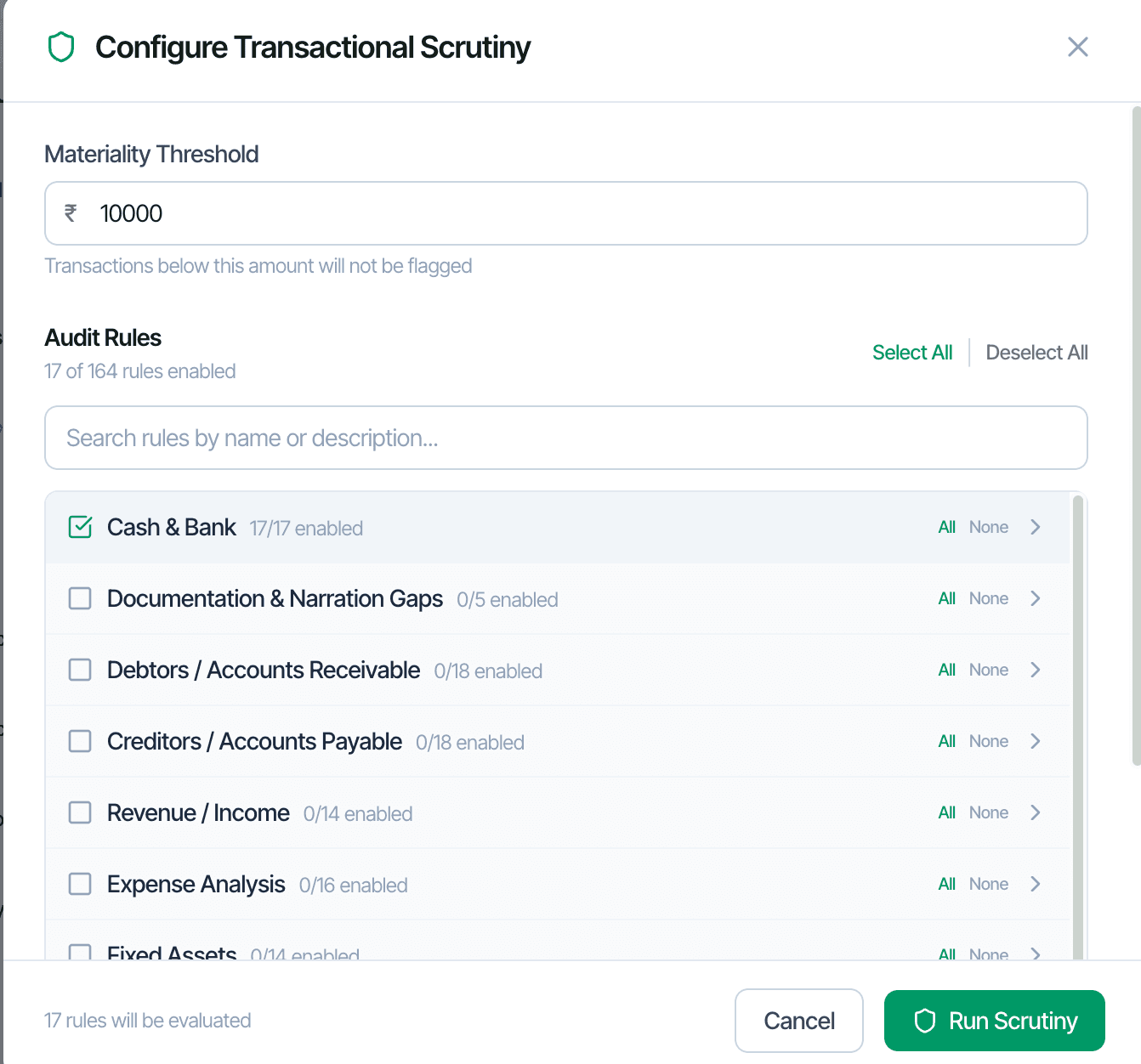
Configure Transactional ସ୍କ୍ରୁଟିନି, 164 rules across 13 ମଡ୍ୟୁଲ୍

ଅଡିଟ୍ ଫାର୍ମ historically sampled 2-5 percent of ଭାଉଚର୍ because that was all human review could cover. CORAA's Transactional ସ୍କ୍ରୁଟିନି tests every ଭାଉଚର୍ against 164 rules organized into 13 thematic ମଡ୍ୟୁଲ୍. Each rule is anchored to an ICAI Standard on Auditing, an ଆୟକର ଅଧିନିୟମ section, or a GST Act provision. Rules can be disabled, reweighted, or rethresholded per ଏଙ୍ଗେଜମେଣ୍ଟ୍, with configuration persisting for that client.

  • 164 rules across 13 thematic ମଡ୍ୟୁଲ୍
  • Every ଭାଉଚର୍ tested: typically 50,000 to 200,000 per ଏଙ୍ଗେଜମେଣ୍ଟ୍
  • Each rule anchored to ICAI SA, IT Act section, or GST Act provision
  • Materiality threshold configurable per ଏଙ୍ଗେଜମେଣ୍ଟ୍ (default ₹10,000)
  • Per-client rule disable, reweight, rethreshold
  • Configuration persists for that client across financial ବର୍ଷ
Two paths, one ledger

The old way, and ours.

Two paths to the same audit conclusion. One leaves traces; the other doesn't.

Traditional

The old way

  • -Senior article picks 100-200 ଭାଉଚର୍ using judgment sampling
  • -Reviews each ଭାଉଚର୍ manually against an internal ଚେକଲିଷ୍ଟ
  • -Anomalies flagged in a Word document or Excel sheet
  • -Rule application varies between ଅଡିଟ୍ ଟିମ୍ members
କଭରେଜ୍: 2-5% of ଭାଉଚର୍. ସମୟ: 4-6 ଘଣ୍ଟା per ଏଙ୍ଗେଜମେଣ୍ଟ୍. Consistency: depends on the reviewer.
CORAA

On the Ledger

  • 164 rules applied to every ଭାଉଚର୍ uniformly
  • Severity Dashboard ranks ଅସଙ୍ଗତି by rule contribution and ଲେଜର୍ impact
  • False-flag rate drops below 5% by the second ଅଡିଟ୍ cycle as rule weights adapt
  • Each ଅସଙ୍ଗତି drills to its source ଭାଉଚର୍ with one click
  • ନିଷ୍କର୍ଷ auto-classified by materiality band
କଭରେଜ୍: 100%. ସମୟ: 10-15 minutes runtime, 30-45 minutes review. Consistency: deterministic.
How it works

Three steps. Every trace logged.

Step 01

Configure the rule set

Open the Configure Transactional ସ୍କ୍ରୁଟିନି modal. Set the materiality threshold below which ଲେଣଦେଣ are not flagged. Enable rule ମଡ୍ୟୁଲ୍ relevant to the ଏଙ୍ଗେଜମେଣ୍ଟ୍ (Cash & Bank, Debtors, Creditors, etc.). The configuration persists for this client.

Step 02

Run ସ୍କ୍ରୁଟିନି

CORAA tests every ଭାଉଚର୍ against the enabled rules in 5-10 minutes for a 50,000-ଭାଉଚର୍ ଏଙ୍ଗେଜମେଣ୍ଟ୍. Anomalies surface in the Anomaly Register with severity bands (High, Medium, Low) and rule attribution.

Step 03

Review and resolve

Open the Severity Dashboard for top contributing rules cross-referenced with top affected ଲେଜର୍. Drill to any ଭାଉଚର୍ in three clicks. Flag for review, dismiss, or dismiss-family (suppress the pattern permanently for that client).

Inside the module

What you actually get.

13 thematic ମଡ୍ୟୁଲ୍

Rules organized by ଅଡିଟ୍ domain. Cash & Bank covers cash ଲେଣଦେଣ above ₹2 lakh (Sec 269ST), weekend payments, Sunday ଲେଣଦେଣ, threshold breaches. Documentation & Narration Gaps covers missing narrations and vague entries.

  • Cash & Bank, Documentation & Narration Gaps
  • Debtors / AR, Creditors / AP
  • Revenue / Income, Expense Analysis, Fixed Assets
  • TDS, GST, Working Capital
  • ଅନ୍ୟ Income, Statutory Dues, Document Trail

Statutory anchors per rule

Every rule references the underlying regulation. Sec 40A(3) cash above ₹10K, Sec 269SS/T cash loans, Sec 17(5) GST blocked credits, Rule 36(4) ITC limit, etc.

  • IT Act sections cited inline
  • କମ୍ପାନୀ ଅଧିନିୟମ sections (Sec 188, Sec 197)
  • GST Act and Rules
  • MSMED Act 2006
  • ICAI ଅଡିଟିଂ ମାନଦଣ୍ଡ

Severity Dashboard

Three severity bands with ଅସଙ୍ଗତି counts and value at risk. Top contributing rules ranked by ପରିମାଣ and value. Top affected ଲେଜର୍ ranked by ଅସଙ୍ଗତି count. Click any cell to drill.

  • High / Medium / Low bands
  • Top rules × top ଲେଜର୍ cross-reference
  • Value-at-risk per band
  • Drill from rule to ଭାଉଚର୍, or ଲେଜର୍ to ଭାଉଚର୍

Per-client rule customization

Disable rules that don't apply (weekend ଲେଣଦେଣ for an automobile dealer). Reweight severity. ରିସେଟ୍ thresholds. Configuration locks to the ଏଙ୍ଗେଜମେଣ୍ଟ୍; reused next year automatically.

  • Disable per-client
  • Reweight severity
  • Custom thresholds
  • ବର୍ଷ-on-year persistence
  • ଅଡିଟ୍ log captures every config change
Frequently asked

Answers, up front.

Cash & Bank, Documentation and Narration Gaps, Debtors / Accounts Receivable, Creditors / Accounts Payable, Revenue / Income, Expense Analysis, Fixed Assets, TDS, GST, Working Capital, ଅନ୍ୟ Income, Statutory Dues, and Document Trail. Each ମଡ୍ୟୁଲ୍ groups related rules.
ଲେଜର୍ ସ୍କ୍ରୁଟିନି works at the ଲେଜର୍ level, profiling each ଲେଜର୍'s normal behaviour and surfacing deviations. Transactional ସ୍କ୍ରୁଟିନି works at the ଭାଉଚର୍ level, applying 164 rules to every entry. Both run together; ଅଡିଟ୍ ଟିମ୍ typically begin with ଲେଜର୍ ସ୍କ୍ରୁଟିନି to scope review effort and drill into Transactional ଅସଙ୍ଗତି.
Custom rules will be supported in a future release. ଆଜି, the 164 rules cover what Indian ବୈଧାନିକ ଅଡିଟ୍, ଟ୍ୟାକ୍ସ ଅଡିଟ୍, and GST ଅଡିଟ୍ require. Firms can request additions via support.
Three mechanisms: disable rules that don't apply to a client, dismiss ନିଷ୍କର୍ଷ as a 'family' to suppress the pattern permanently for that ଏଙ୍ଗେଜମେଣ୍ଟ୍, and let the engine learn from dismissals (rule weights shift down where the ଅଡିଟର୍ consistently marks a pattern as normal). By the second or third ଅଡିଟ୍, false-flag rates typically fall below 5%.
See it on a real ledger

Run transactional ସ୍କ୍ରୁଟିନି on one of your engagements.

Bring a Trial Balance and a General Ledger. We'll walk through scrutiny end-to-end on your data, not a sandbox.

Start the free trial →Book a walk-through
Transactional Scrutiny AI | 164 Rules, 13 Modules for Statutory Audit | CORAA | CORAA