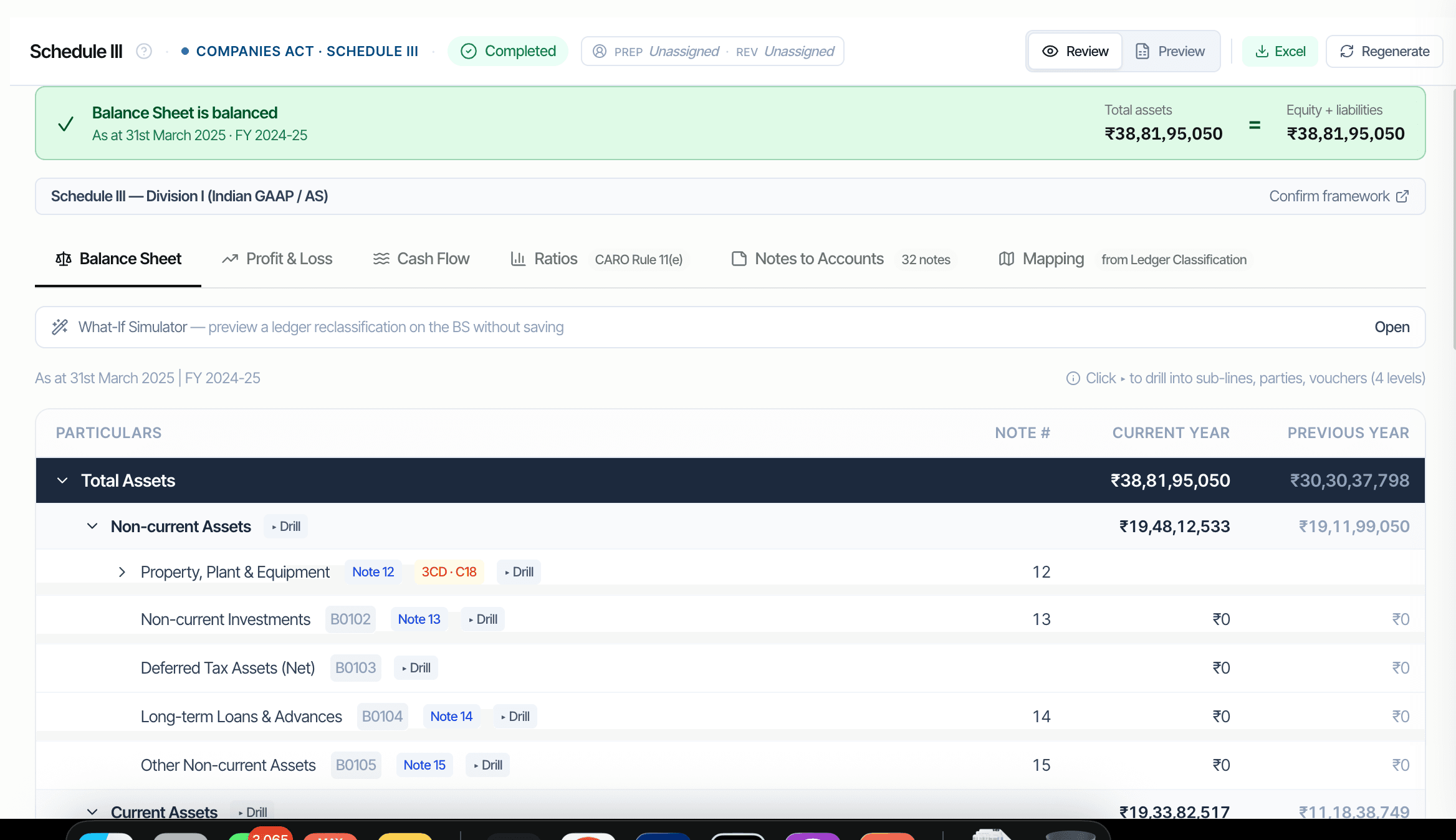
AS 3 (Indian GAAP) and Ind AS 7 prescribe the Cash Flow विवरण structure: Operating, Investing, and Financing activities with the indirect method (most common in India). CORAA composes the विवरण from Balance Sheet movement plus P&L non-cash adjustments. The closing cash balance derived must reconcile to the Cash and Bank line on the Balance Sheet; CORAA enforces this tie-out.
Two paths to the same audit conclusion. One leaves traces; the other doesn't.
प्रोfit Before Tax adjusted for non-cash items (depreciation, amortization, finance लागत, loss/gain on PPE disposal). Then working capital change: increase in receivables (use of cash), increase in payables (source of cash), inventory movement. Operating tax paid subtracted.
Purchase of स्थिर परिसंपत्तियाँ (use of cash), sale of स्थिर परिसंपत्तियाँ (source), purchase and sale of investments. Interest and dividend received.
प्रोceeds from borrowings (source), repayment of borrowings (use), proceeds from share issue, dividends paid, finance लागत paid.
Starts with प्रोfit Before Tax from the P&L. जोड़ेंs वापस non-cash items, adjusts for working capital change, deducts tax paid, arrives at Net Cash from Operating Activities.
नकद में शुद्ध परिवर्तन = परिचालन + निवेश + वित्तपोषण। यह BS में नकद और बैंक के आरंभिक और समापन शेष के अंतर के बराबर होना चाहिए। यदि टाई-आउट विफल हो, तो CORAA कैश फ़्लो को 'तैयार' चिह्नित करने से मना कर देता है।
व्यापार प्राप्तियों में वृद्धि = नकद का उपयोग; कमी = स्रोत। इन्वेंट्री के लिए भी यही। व्यापार देयताओं में वृद्धि = स्रोत; कमी = उपयोग। CORAA प्रत्येक को BS परिवर्तन से निकालता है।
Every CF line drills to the constituent लेजर movement. The ऑडिटर sees what feeds the line, can verify against the underlying लेजर, and adjusts the वर्गीकरण if needed.