മനുഷ്യ അവലോകനത്തിന് കവർ ചെയ്യാനാകുന്നത് അത്രമാത്രമായതിനാൽ ഓഡിറ്റ് സ്ഥാപനങ്ങൾ ചരിത്രപരമായി വൗച്ചറുകളുടെ 2-5 ശതമാനം സാംപിൾ ചെയ്തിരുന്നു. CORAA-യുടെ ട്രാൻസാക്ഷണൽ സൂക്ഷ്മപരിശോധന 13 തീമാറ്റിക് മൊഡ്യൂളുകളായി ക്രമീകരിച്ച 84 റൂളുകൾക്കെതിരെ ഓരോ വൗച്ചറും പരിശോധിക്കുന്നു. ഓരോ റൂളും ഒരു ICAI സ്റ്റാൻഡേർഡ് ഓൺ ഓഡിറ്റിംഗിലോ Income Tax Act സെക്ഷനിലോ GST Act വ്യവസ്ഥയിലോ ആങ്കർ ചെയ്തിരിക്കുന്നു. റൂളുകൾ ഓരോ എൻഗേജ്മെന്റിനും ഡിസേബിൾ ചെയ്യാം, റീവെയ്റ്റ് ചെയ്യാം, ത്രെഷോൾഡ് മാറ്റാം — ആ ക്ലയന്റിന് ക്രമീകരണം നിലനിൽക്കുന്നു.
Two paths to the same audit conclusion. One leaves traces; the other doesn't.
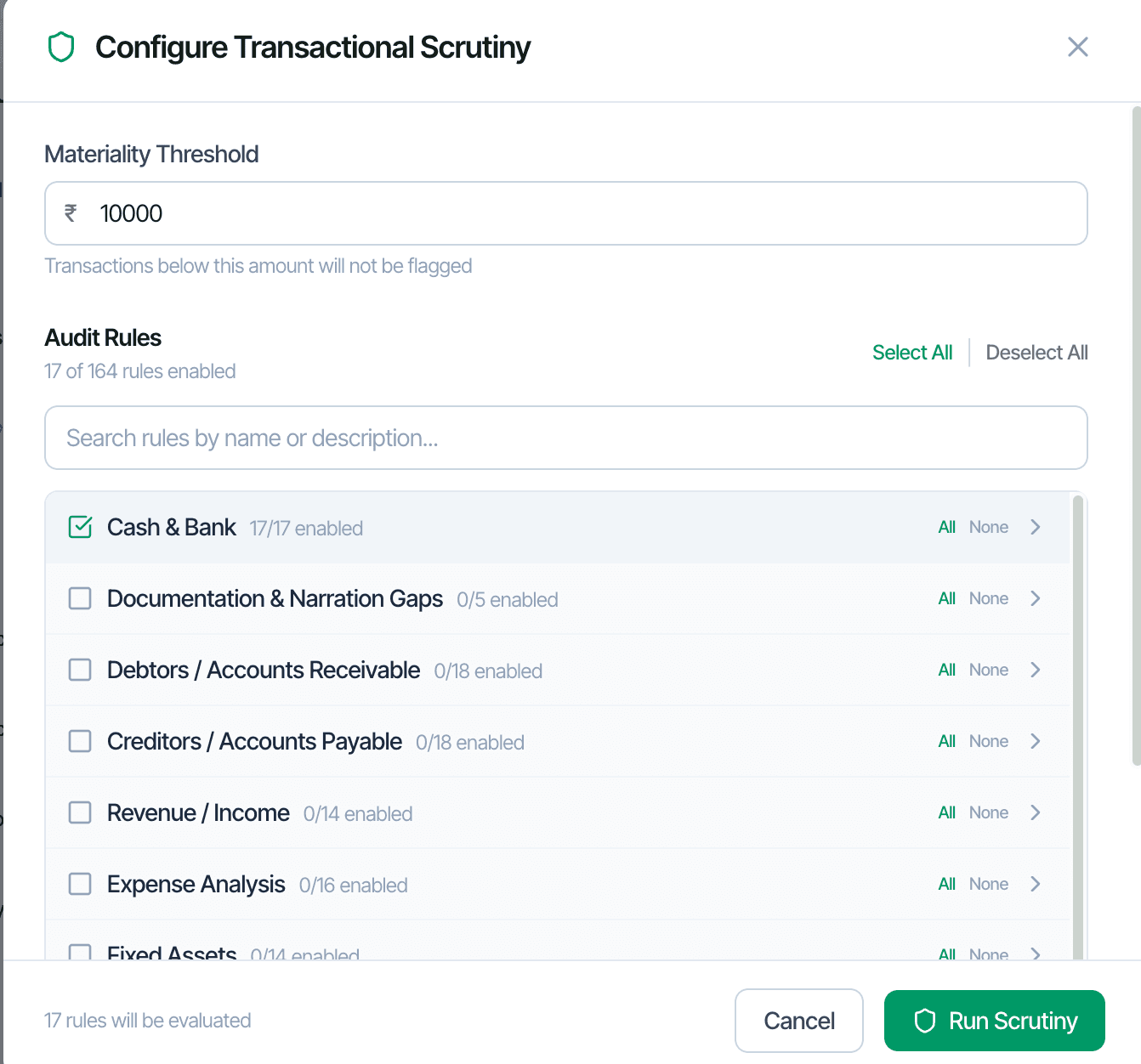
Open the Configure Transactional Scrutiny modal. Set the materiality threshold below which transactions are not flagged. Enable rule modules relevant to the engagement (Cash & Bank, Debtors, Creditors, etc.). The configuration persists for this client.
CORAA tests every voucher against the enabled rules in 5-10 minutes for a 50,000-voucher engagement. Anomalies surface in the Anomaly Register with severity bands (High, Medium, Low) and rule attribution.
Open the Severity Dashboard for top contributing rules cross-referenced with top affected ledgers. Drill to any voucher in three clicks. Flag for review, dismiss, or dismiss-family (suppress the pattern permanently for that client).
Rules organized by audit domain. Cash & Bank covers cash transactions above ₹2 lakh (Sec 269ST), weekend payments, Sunday transactions, threshold breaches. Documentation & Narration Gaps covers missing narrations and vague entries.
Every rule references the underlying regulation. Sec 40A(3) cash above ₹10K, Sec 269SS/T cash loans, Sec 17(5) GST blocked credits, Rule 36(4) ITC limit, etc.
Three severity bands with anomaly counts and value at risk. Top contributing rules ranked by volume and value. Top affected ledgers ranked by anomaly count. Click any cell to drill.
Disable rules that don't apply (weekend transactions for an automobile dealer). Reweight severity. Reset thresholds. Configuration locks to the engagement; reused next year automatically.