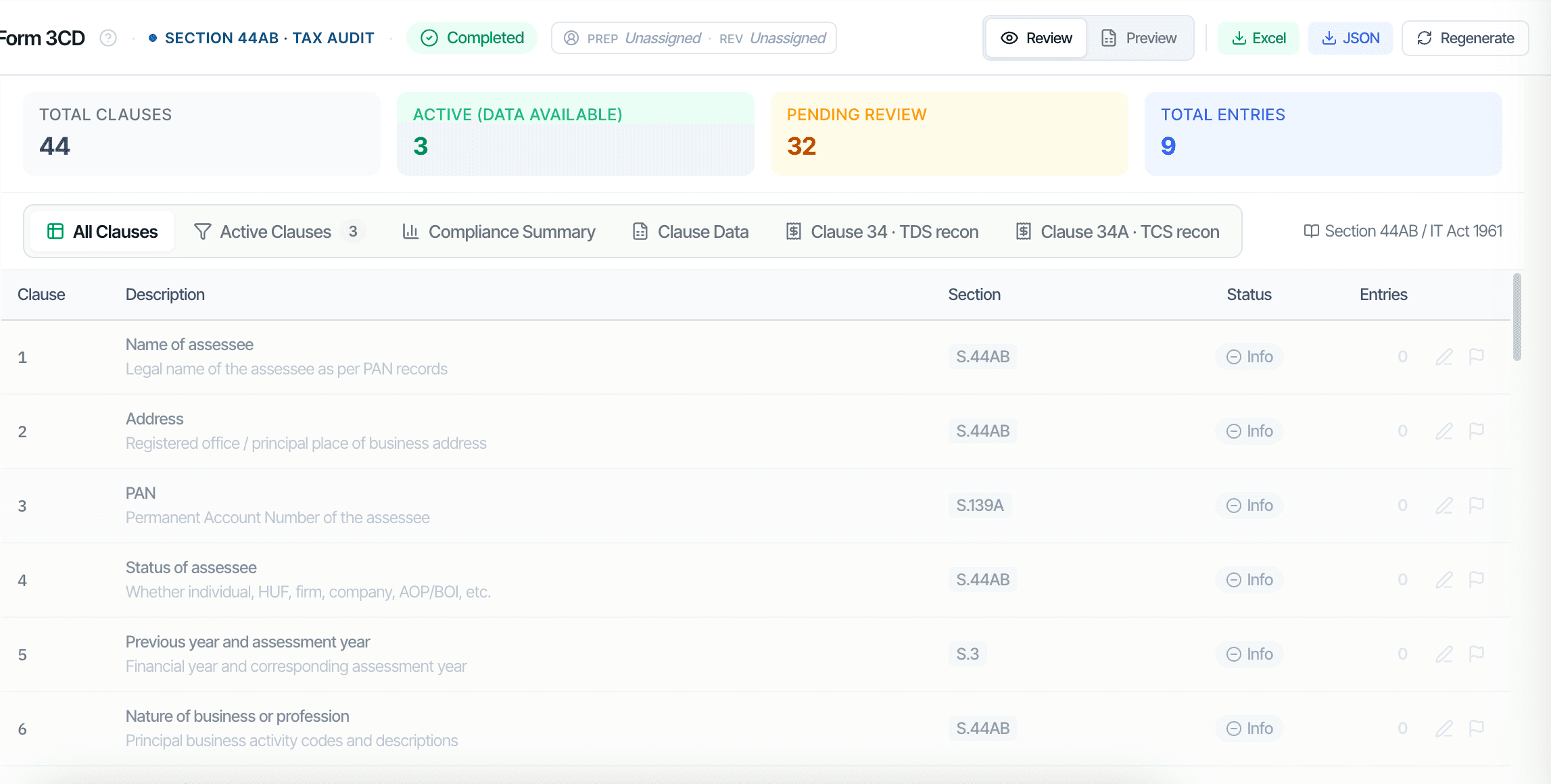
CORAA automates the data-gathering and reconciliation work behind Form 3CD, so your team spends time on judgement, not on copying numbers from Tally to Excel. 55% reduction in engagement time.
Related party transaction extraction for Clause 26
Ledger scrutiny
8–12h → 2–3h
Plus all reconciliations
GST/TDS reconciliation
4–6h → 1h
For Form 3CD
Working papers
3–5h → 45m
Generated with full evidence
Section 44AB, answered
The questions auditors actually ask.
No. Data-heavy clauses, depreciation (18), the Sec 43B due-date tests (20, 26), the TDS/TCS tables (34), are computed reproducibly from the imported ledger. Judgement clauses, ICDS (13/14), Sec 37 disallowances (21(a)), deemed dividend (36A), the GST break-up (44), are drafted as candidates with the rule cited, for the auditor to characterise. The engine never concludes them.
Property transfers are checked against the stamp-duty value where that data is available, and any shortfall is surfaced for the auditor's review. This is a books-and-register check, not a substitute for the stamp-duty valuation itself.
No, they're separate. Related-party transactions under Sec 40A(2)(b) feed Clause 23; statutory dues under Sec 43B, PF, ESI, GST, TDS, feed Clause 26. CORAA keeps the two distinct so a review doesn't conflate them.
The confirmed report is produced in three forms that agree, the e-filing JSON schema-validated against the current utility, a government-format workbook, and a DOCX, so the JSON you upload reconciles to the workbook you review and the report you file.
The auditor is. CORAA computes, cites and drafts, but every clause is a candidate awaiting confirmation, and it never signs. The engine does the work; the auditor decides.
Data is hosted in India, handled in line with the DPDPA, on ISO 27001-certified infrastructure. Client data is never used to train shared or third-party models.
Beat the deadline
More clients, better quality, same September.
സൗജന്യ ട്രയൽ — ആദ്യ ഓഡിറ്റ് ഞങ്ങളുടെ വക. ഇന്ത്യയിൽ ഹോസ്റ്റ് ചെയ്തത്. DPDPA പാലിക്കുന്നു.