CORAA
AI Modules/Reconciliation/TCS Reconciliation
Form 27EQ · Reconciliation· मिलान

TCS Reconciliation

Books versus Form 27EQ and 26AS Part B. Buyer-wise. Section 206C compliance.

CORAA Form 3CD with embedded TCS reconciliation

TCS reconciliation sits alongside TDS reconciliation in the Form 3CD Working Paper. Section 206C(1F) for motor vehicles above ₹10 lakh, 206C(1H) for buyer-wise sale of goods above ₹50 lakh annually, 206C(1G) for foreign remittances, each with its own threshold logic. CORAA verifies collection against books, then reconciles against Form 27EQ returns and 26AS Part B.

  • Books-only checks at Tier I, section-wise totals, threshold per buyer for 206C(1H)
  • Section 206C(1F) motor vehicle: ₹10 lakh per transaction trigger
  • Section 206C(1H): ₹50 lakh annual buyer-wise threshold
  • Section 206C(1G): foreign tour packages, LRS remittances
  • Three-bucket recon once Form 27EQ uploaded
  • Form 3CD Clause 34A auto-populated
Two paths, one ledger

The old way, and ours.

Two paths to the same audit conclusion. One leaves traces; the other doesn't.

Traditional

The old way

  • -Senior article computes 206C(1H) buyer-wise thresholds annually in Excel
  • -Motor vehicle sales reviewed one invoice at a time for 206C(1F) applicability
  • -Form 27EQ download tied manually to books TCS register
  • -Buyer-wise variance investigation, threshold misses often surface only at audit close
Threshold compliance frequently missed. 206C(1H) ₹50L annual cap requires cumulative tracking per buyer.
CORAA

On the Ledger

  • Buyer-wise cumulative tracking, automatic flag at ₹50 lakh annual
  • Motor vehicle invoices auto-tagged for 206C(1F) at ₹10 lakh trigger
  • Books TCS register reconciled against Form 27EQ in three buckets
  • Section-wise totals tied to Form 3CD Clause 34A automatically
  • Threshold compliance verified per buyer per section
  • Sec 206CCA non-filer higher-rate verification
Threshold misses flagged before sign-off. Clause 34A auto-populated.
How it works

Three steps. Every trace logged.

Step 01

Identify TCS-applicable transactions

CORAA scans every sale voucher for section applicability, 206C(1F) motor vehicles, 206C(1H) goods over threshold, 206C(1G) foreign remittances. Books TCS ledgers (collected and payable) tied automatically.

Step 02

Upload Form 27EQ

Form 27EQ returns (quarterly) and 26AS Part B uploads, multi-file ingestion. CORAA merges and reconciles against books TCS register.

Step 03

Verify thresholds and disclose

Section-wise totals populate Form 3CD Clause 34A. Buyer-wise threshold breaches surface, including cases where TCS should have been collected but was not. Each variance with cause attribution.

Inside the module

What you actually get.

Buyer-wise threshold tracking for 206C(1H)

Sec 206C(1H) requires TCS at 0.1% on sale of goods exceeding ₹50 lakh per buyer annually (when turnover above ₹10 crore). CORAA tracks cumulative sales per buyer and flags when the threshold is crossed mid-year.

  • Buyer-wise cumulative running total
  • Annual threshold trigger at ₹50 lakh
  • Auditee turnover prerequisite verified (₹10 crore)
  • Backdated TCS collection candidates flagged

Section 206C(1F) motor vehicle trigger

Every sale of motor vehicle exceeding ₹10 lakh triggers Sec 206C(1F) TCS at 1%. CORAA scans every motor vehicle invoice for the threshold and verifies TCS collection.

  • Per-invoice ₹10 lakh trigger
  • Auto-tagged from voucher narration / item description
  • Cases of non-collection flagged for Clause 34A disclosure

Form 27EQ reconciliation

Three-bucket match between books TCS collected and Form 27EQ filed. Variances flagged with cause, collected but not filed, filed but not collected, period mismatch.

  • Matched: tied buyer + amount + period
  • Books-only: collected but not filed yet (timing)
  • 27EQ-only: typically buyer-side reporting issues

Form 3CD Clause 34A integration

Clause 34A of Form 3CD asks for TCS details by section. CORAA's reconciled TCS totals populate the Clause directly; books-vs-27EQ variances disclose at the appropriate sub-clause.

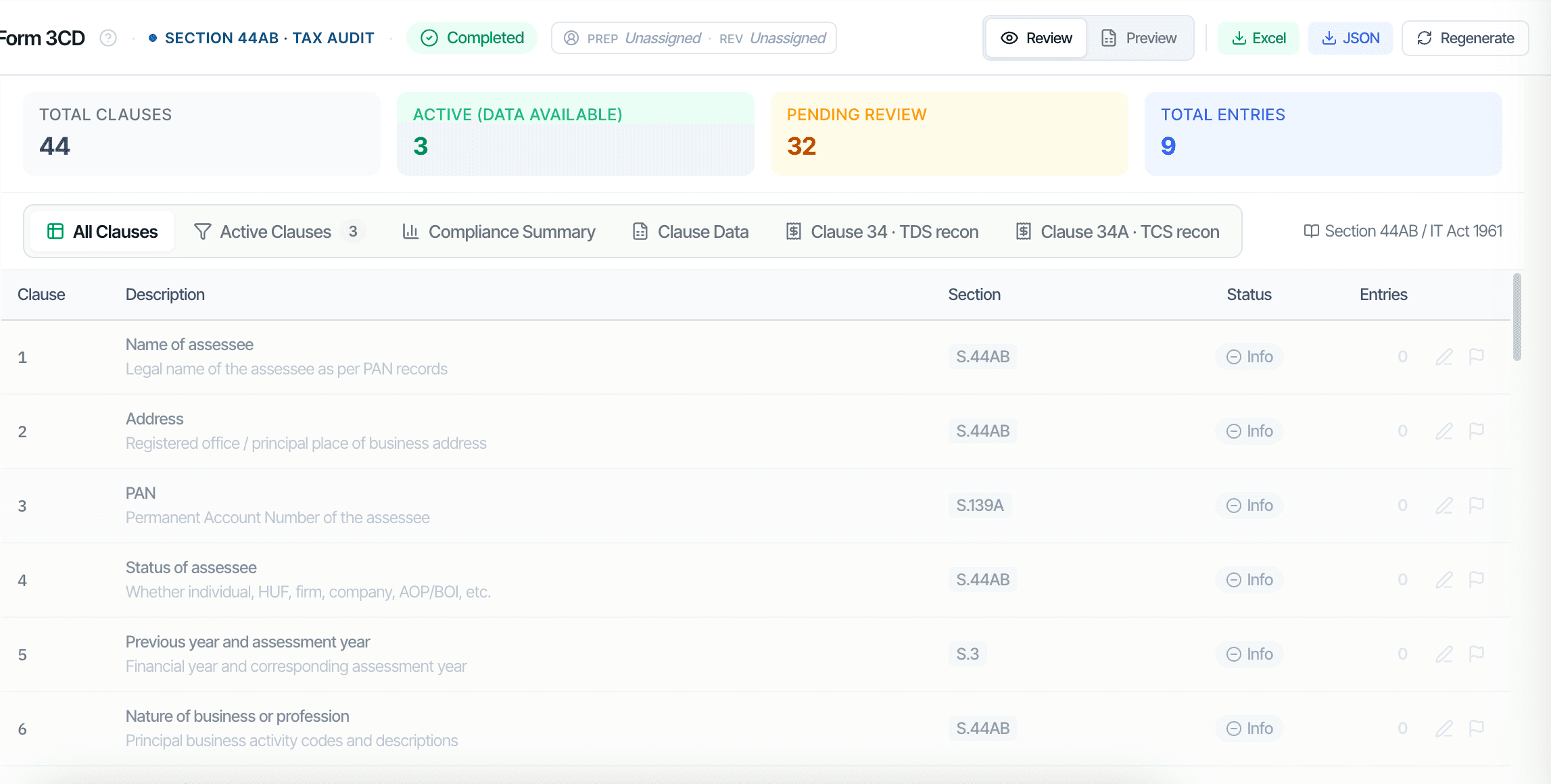
  • Auto-populated Clause 34A table
  • Section-wise breakdown
  • Variance disclosure path
Frequently asked

Answers, up front.

CORAA maintains a buyer-wise cumulative running total throughout the financial year. When a buyer's cumulative purchases cross ₹50 lakh, the next invoice triggers TCS at 0.1% on the excess. Cases where TCS was not collected on the threshold-crossing invoice are flagged. The auditee's turnover prerequisite (₹10 crore preceding year) is also verified.
Sec 206CCA mandates higher TCS rate (twice the prescribed rate or 5 percent, whichever is higher) for buyers who haven't filed IT returns. When a buyer is flagged as a non-filer in the Party Master (or via the IT department's compliance check API), CORAA verifies the higher rate has been applied. Cases of standard-rate application to non-filers are flagged.
Yes. Sec 206C(1G) applies to overseas remittances under LRS exceeding ₹7 lakh per financial year and to foreign tour package operators. CORAA flags candidate transactions from voucher narration (forex purchase, tour booking) and verifies TCS collection where applicable.
27EQ returns are filed quarterly (April-June, July-September, October-December, January-March). CORAA matches each quarterly 27EQ against the corresponding books TCS collected in that quarter. Period-mismatch variances (collection booked in one quarter, filed in another) surface as a distinct cause attribution.
See it on a real ledger

Run tcs reconciliation on one of your engagements.

Bring a Trial Balance and a General Ledger. We'll walk through reconciliation end-to-end on your data, not a sandbox.

Start the free trial →Book a walk-through
TCS Reconciliation AI, Books vs Form 27EQ / 26AS Part B | CORAA | CORAA