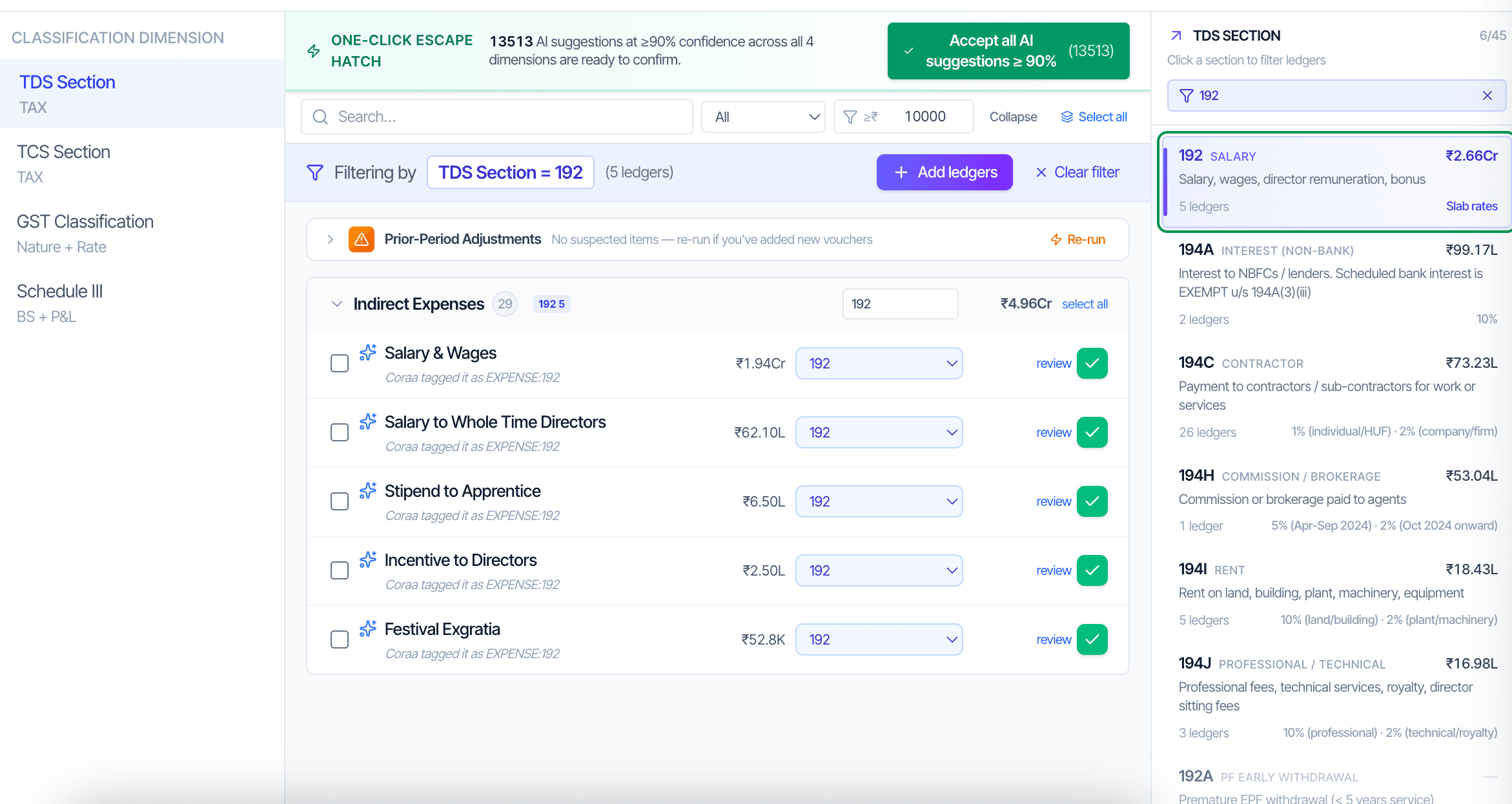
பின்வரும் ஒவ்வொரு எண்ணும் ஒவ்வொரு லெட்ஜர் எங்கு அமர்கிறது என்பதைச் சார்ந்தது. Ledger Mapping என்பது, ஒவ்வொரு பொருண்மையுள்ள லெட்ஜருக்கும் அமைப்பு முன்மொழியும் Schedule III வகையையும் சட்டப்பூர்வ-பொருந்துதன்மை குறிச்சொற்களையும் (PF, ESI, PT) கணக்காய்வாளர் உறுதிப்படுத்தும், மேலெழுதும் அல்லது விலக்கும் இடம். என்ஜின் எப்போதும் பரிந்துரைக்கிறது மட்டுமே — உறுதிப்படுத்துவதில்லை — எனவே கணக்காய்வாளர் முத்திரையிடுவதே ஒவ்வொரு பணிக்காகிதமும் Schedule III தொகுப்பும் படிக்கும் உண்மை. TDS, TCS மற்றும் GST-க்கு லெட்ஜர் குறிச்சொல்லே தேவையில்லை: அவற்றின் சரிபார்ப்புக் காகிதங்கள் வரிப் பகுதியையும், தொகையையும், திசையையும் வவுச்சர்களிலிருந்தே கட்டமைப்பு ரீதியாகப் படிக்கின்றன.
Two paths to the same audit conclusion. One leaves traces; the other doesn't.
ERP தரவு உள்ளே வந்ததும், Tier 1 தீர்மானகர விதிகள் (Tally குழு + பெயர் + நிலையான-குழு பொருத்தம்) பெரும்பான்மையை உடனடியாகத் தீர்க்கின்றன. Tier 1 தீர்க்க முடியாத லெட்ஜர்கள் Tier 2-க்குச் செல்கின்றன — ஒரு LLM வவுச்சர் விளக்கங்களின் மாதிரியைப் படித்து, காரணத்துடன் ஒரு மதிப்பை முன்மொழிகிறது — மேலும் Tier 3, பிற நிறுவனங்களில் கணக்காய்வாளர்கள் ஒத்த லெட்ஜர்களை எப்படி மேப் செய்தார்கள் என்பதைச் சரிபார்க்கிறது. ஒவ்வொரு பரிந்துரையும் அதன் காரணத்துடன் வந்து சேர்கிறது.
Worksheet-இன் புள்ளிவிவரப் பட்டை, தானாக மேப் செய்யப்பட்ட லெட்ஜர்களை (கவனம் தேவையற்றவை) உண்மையிலேயே தீர்ப்பு கேட்கும் வரிசைகளிலிருந்து பிரிக்கிறது. கொடியிடப்பட்ட வரிசையைத் திறந்து பரிந்துரையையும், அதன் காரணத்தையும், நம்பிக்கை பேட்ஜையும் பாருங்கள் — ஏற்கவும், மேலெழுதவும், அல்லது விலக்கு எனக் குறிக்கவும். மொத்தச் செயல்கள் மீதியைக் கையாள்கின்றன — உயர்-நம்பிக்கை பரிந்துரைகளுக்கான accept-all உட்பட, அது எத்தனை வரிசைகளைத் தொடும் என்பதை உறுதிப்படுத்தும் முன்பே காட்டுகிறது.
மேப்பிங்குகள் லெட்ஜர் மற்றும் நிதியாண்டு வாரியாகச் சேமிக்கப்படுகின்றன, Copy from prior FY உறுதிப்படுத்தப்பட்ட மேப்பிங்குகளை முன்னெடுத்துச் செல்கிறது. அடுத்த ஆண்டின் கணக்காய்வு அதே லெட்ஜர்கள் ஏற்கனவே மேப் செய்யப்பட்டவையாகத் தொடங்குகிறது; மாறியதை மட்டும் கணக்காய்வாளர் மதிப்பாய்வு செய்கிறார். Re-suggest, ஒரு re-sync அல்லது பொருண்மை மாற்றத்திற்குப் பிறகு என்ஜினை மீண்டும் இயக்குகிறது.
ஒவ்வொரு லெட்ஜரையும் அதன் Schedule III வரிக்கு மேப் செய்கிறது — ஒருங்கிணைந்த Balance Sheet + P&L வகைக் காட்சி, ஏற்றத்தில் இயல்புநிலைத் தாவல். ஒவ்வொரு லெட்ஜரும் ஒரு வரியில் அமர்ந்தே ஆக வேண்டும் (இந்தத் தாவலில் விலக்கு இல்லை), நீங்கள் முத்திரையிடுவதே அறிக்கைகள் தொகுக்கும் மதிப்பு.
சம்பளப்பட்டியல் தொடர்பான லெட்ஜர்களுக்கு மட்டுமான சிக்கனமான சட்டப்பூர்வ-பொருந்துதன்மைப் பரிமாணங்கள் — வரிசை இல்லாத லெட்ஜர் வெறுமனே வரம்புக்கு வெளியே. ஒருமுறை குறியுங்கள்; PF/ESI பணிக்காகிதம் அதன் நிலுவை மற்றும் வைப்புப் பரிசோதனைக்கு இந்தக் குறிச்சொற்களைப் படிக்கிறது.
TDS, TCS மற்றும் GST வகைப்படுத்தல் முன்பு இங்கே இருந்தது — வேண்டுமென்றே ஓய்வு பெறச் செய்யப்பட்டது. சரிபார்ப்புக் காகிதங்கள் இப்போது வரிப் பகுதி, தொகை மற்றும் திசையை வவுச்சர்களிலிருந்தே கட்டமைப்பு ரீதியாகப் பெறுகின்றன — எனவே பழையதாகும் லெட்ஜர்-அளவிலான குறிச்சொல் இல்லை, பராமரிக்க வேண்டிய மேப்பிங் கடன் இல்லை.
லெட்ஜர் மற்றும் பரிமாணம் வாரியாக ஒரு வரிசை நிலையைப் பதிவு செய்கிறது — பரிந்துரைக்கப்பட்டது, உறுதிப்படுத்தப்பட்டது, மேலெழுதப்பட்டது அல்லது விலக்கப்பட்டது — பரிந்துரை மூலத்துடன், செயல்பட்டதும் கணக்காய்வாளர் அடையாளத்துடன். பின்வரும் பணிக்காகிதங்களும் Schedule III தொகுப்பும் இந்த அட்டவணையைப் படிக்கின்றன; என்ஜின் முன்மொழிந்த எதையும் கணக்காய்வாளரின் முத்திரை எப்போதும் மேலெழுதுகிறது.