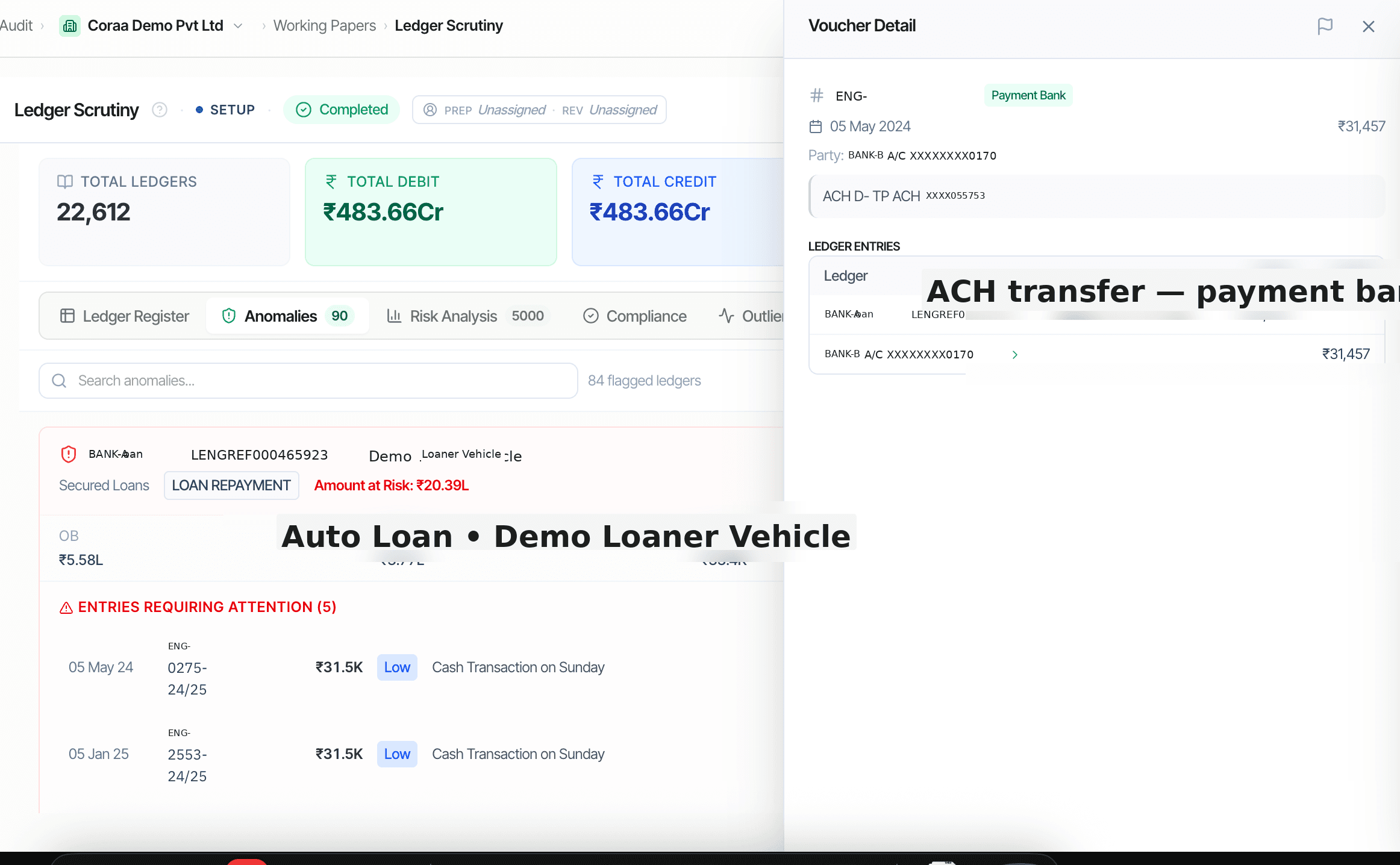
Ledger Scrutiny builds a behavioural profile of every ledger in the General Ledger, movement curves, period-over-period shifts, vendor concentration, frequency of activity. Deviations from that profile surface as a prioritized review list. Auditors no longer scroll through every ledger to find the ten that matter.
Example: Washing Charges average ₹50K-1L per month; January was ₹5L. CORAA flags the five largest invoices for review.
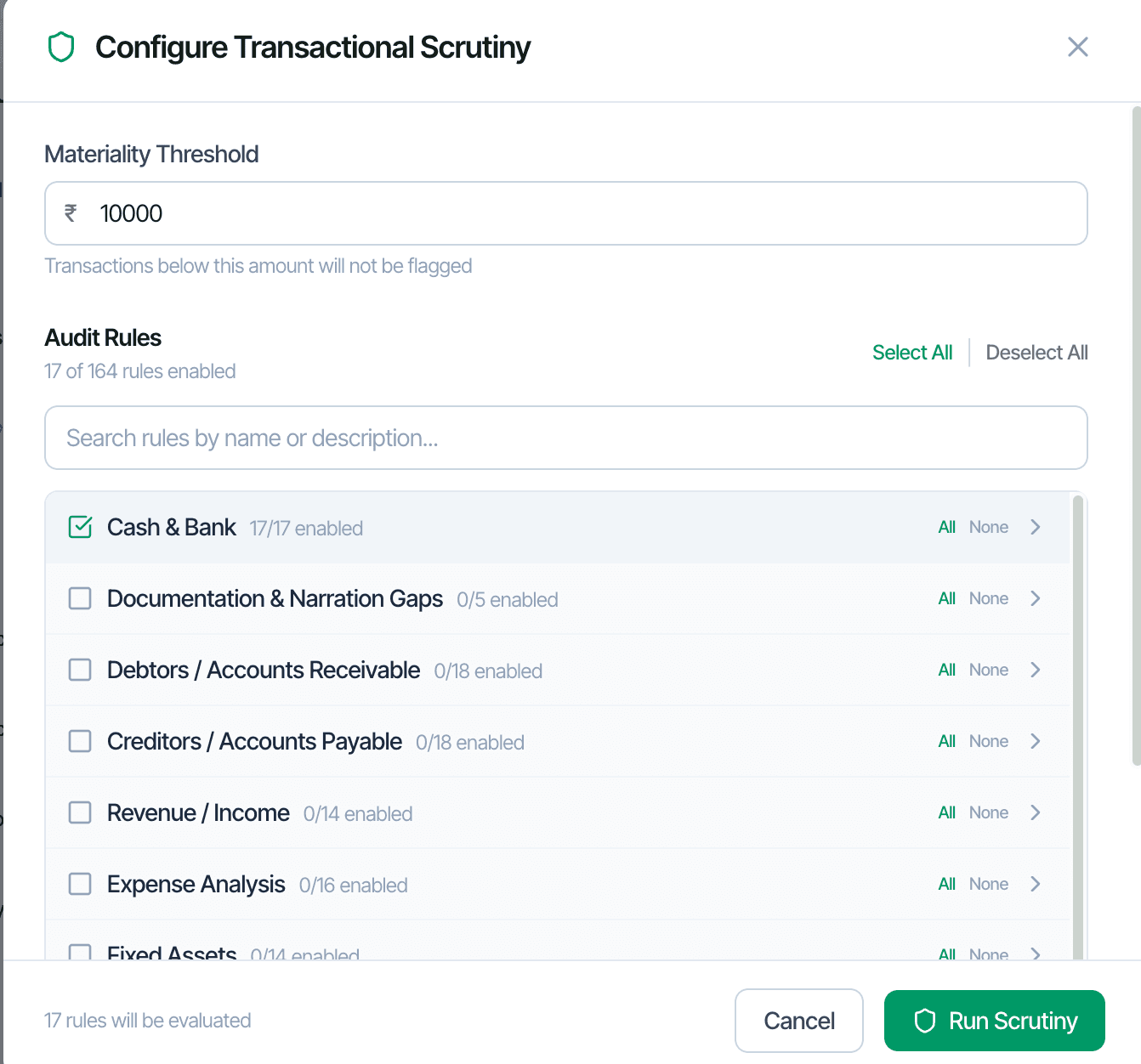
Transactional Scrutiny reasons across every relevant audit area, Cash & Bank, Debtors, Creditors, Revenue, Expense Analysis, Fixed Assets, and more, anchored to an ICAI Standard, an Income Tax Act section, or a GST Act provision, not a fixed checklist. Checks can be disabled, reweighted, or rethresholded per engagement; the configuration persists for that client.
Rule weights adapt per client. False-flag rates typically drop below 5 percent by the second audit cycle.
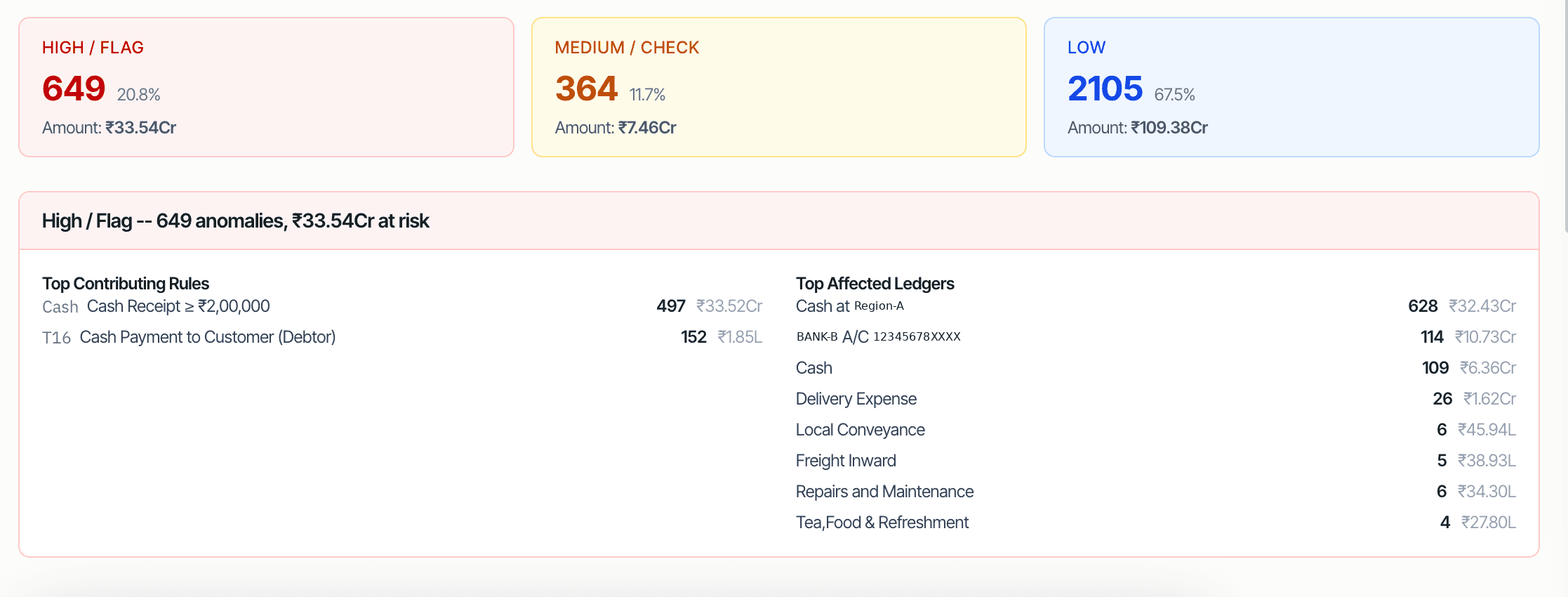
Once scrutiny runs, the Severity Dashboard surfaces top contributing rules cross-referenced with top affected ledgers. Auditors see which patterns are driving anomaly volume and where they concentrate. Forensic-quality drill-down to the voucher in three clicks.
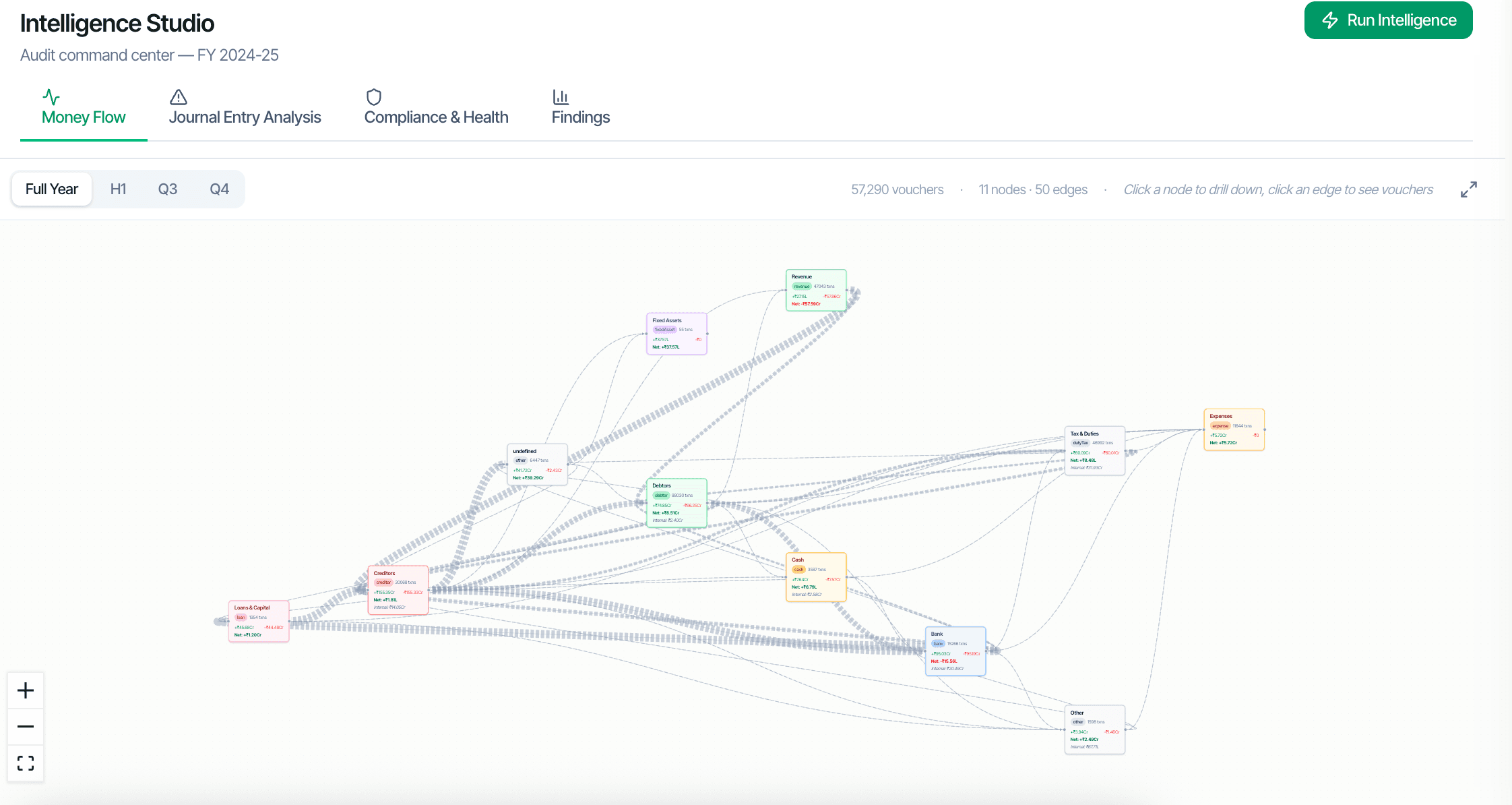
SA 240 mandates testing of journal entries with three specific risk areas, last-minute manual journals, unusual debit-credit pairings, and related-party rings. CORAA tests the complete journal universe against all three, not a sample. The SA 240 Working Paper documents the procedure with the source vouchers attached.
Four scrutiny engines covering ledger-level, voucher-level, and journal-level testing, all on the complete population.