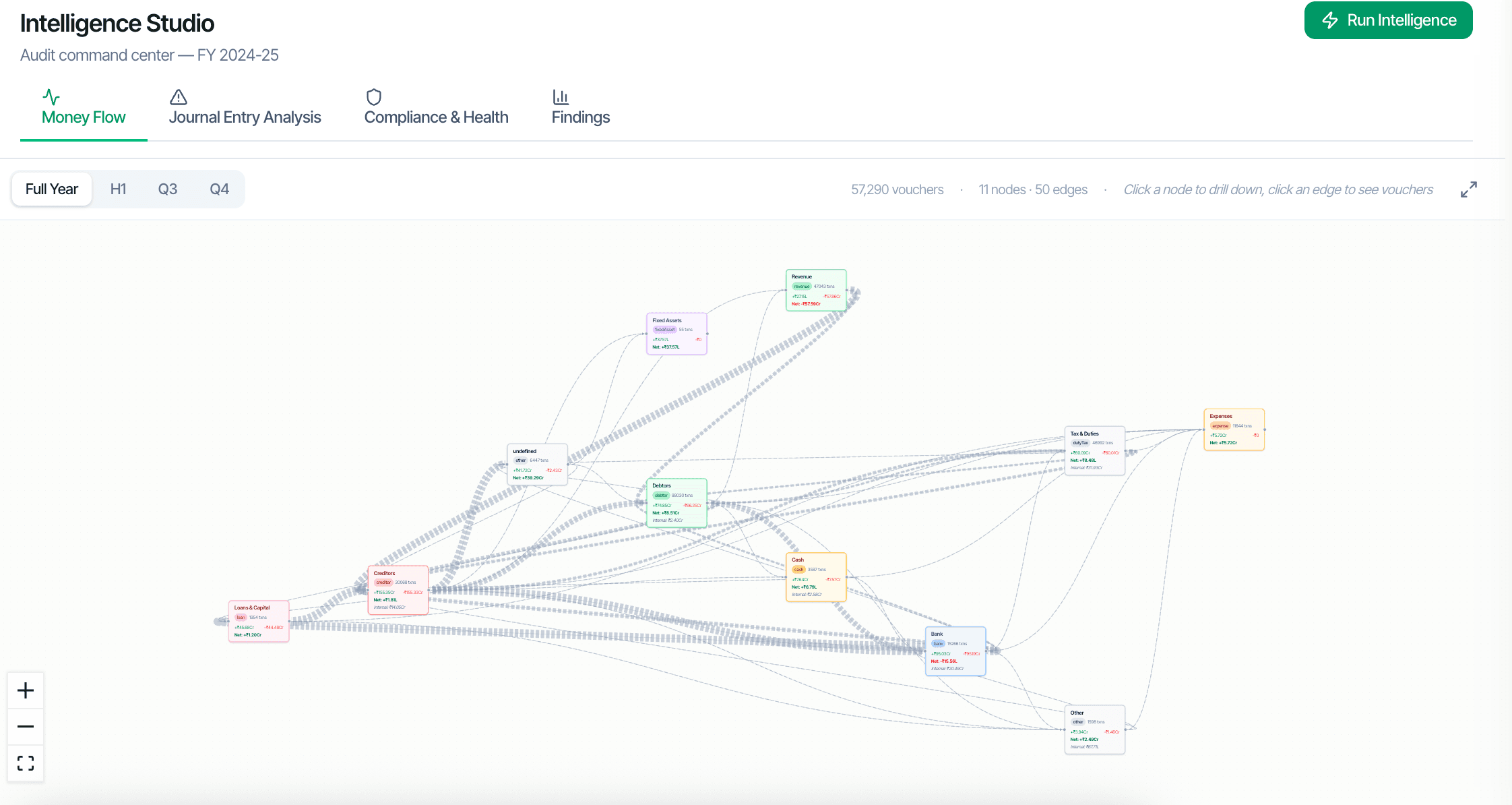
In CORAA, enterprise intelligence means management and audit teams read the same transaction-backed source of truth: the CFO sees live vitals and compliance health, internal audit sees process and control exceptions through connected review queues, and the audit team can drill material graph flows back to vouchers or source schedules where available. It is not a BI layer detached from evidence.
Enterprise intelligence is useful only when it shortens fieldwork. These are the cycle-level questions a CFO, internal auditor or engagement partner can answer before opening individual vouchers.
The same server-computed payload feeds every view. That matters because executive summaries, flow diagrams and finding counts cannot drift away from each other when the engagement gets updated.
Enterprise Intelligence is strongest when it does not stop at a chart. A concentrated supplier flow, unusual journal cluster or leaver-access pattern should become an RCM test, a monitoring rule, an exception register and, where required, an observation with owner and due date.
A graph can show where risk concentrates; an audit file still needs scope, controls, tests, evidence, observations and follow-up. Use these resources when a pattern in Intelligence Studio needs to become an auditable procedure.
Journal-entry spikes, round-number clusters, unusual counterparties, weekend postings, post-close entries and compliance exceptions sit inside the same graph as the financial flows. The reviewer can move from pattern to exception to voucher without losing the audit trail.
Enterprise teams use the same layer for compliance health, group-entity drill-down, working-capital concentration and open action tracking. When a board or audit committee asks what changed, the answer is already tied to transaction evidence.